
1 September 2026 · 5 min read · Elena Tamagnone
Six landscapes, one World Heritage site. A guide to the Langhe, Roero and Monferrato — the vineyards, castles and underground cellars that made Piemonte's wine country a UNESCO treasure.
There are landscapes that are beautiful. And then there are landscapes that tell a story. In southern Piemonte, vineyards stretch across rolling hills, surrounding medieval villages, historic castles, small farmhouses and centuries-old cellars. Here, wine is not simply an agricultural product. It is part of the identity of the land and the people who have cultivated it for generations.
This extraordinary relationship between people, vineyards and landscape is what led UNESCO to recognize the Vineyard Landscape of Piedmont: Langhe-Roero and Monferrato as a World Heritage site in 2014. Rather than a single destination, the property is made up of six distinct areas, each revealing a different side of Piemonte's wine culture — and together, they offer a fascinating way to understand the region.
A Landscape Shaped by Wine
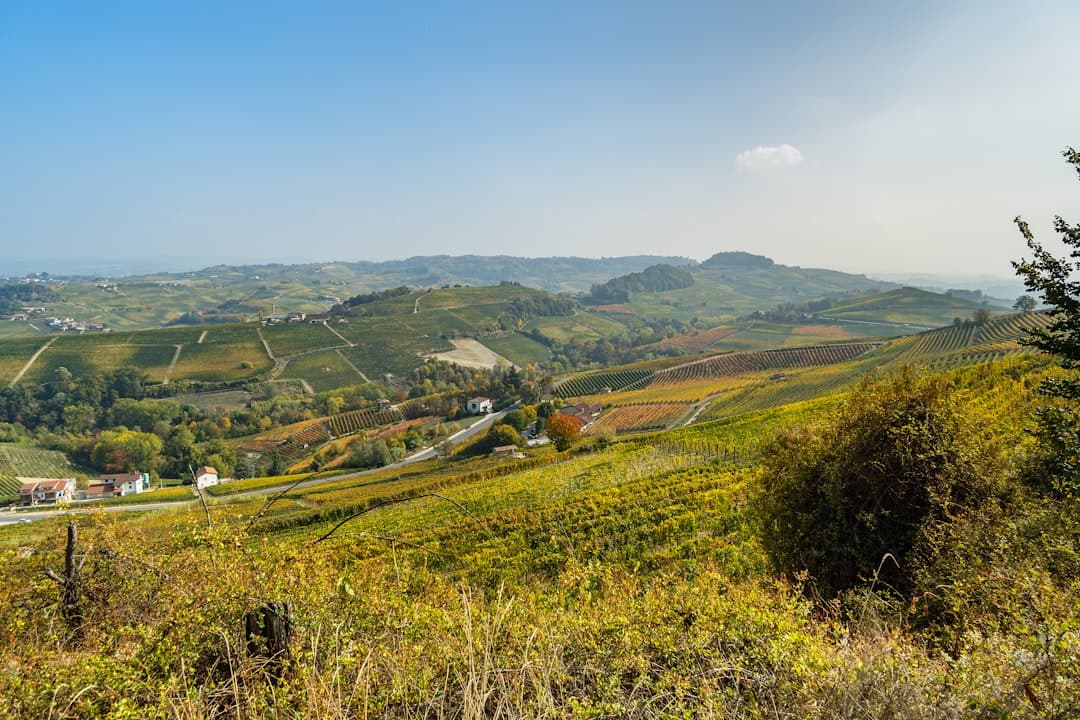
The Langhe, Roero and Monferrato are defined by an almost endless succession of hills. Vineyards follow the contours of the land, creating geometric patterns that change dramatically with the seasons: fresh and green in spring, rich and vibrant in summer, and — in autumn — shades of gold, amber and red. It is no coincidence that the Langhe have become one of Italy's most celebrated destinations for autumn travel.
But this beauty is not simply natural. It has been shaped by generations who learned to work the hills, cultivate native grapes and build communities around wine. Villages sit on hilltops. Castles overlook vineyards. Romanesque churches, farmhouses, ciabot, wineries and underground cellars become part of the landscape. It is this relationship between people and place that makes Piemonte so special.
The Six UNESCO Components
The World Heritage property includes six distinct components, each connected to a different chapter of Piemonte's wine history.
1 — Langa of Barolo

The hills of the Barolo area are among the most iconic landscapes in Piemonte — the home of Barolo, one of Italy's most prestigious wines, made from Nebbiolo grape. The vineyards rise and fall around villages such as Barolo, La Morra, Monforte d'Alba and Serralunga d'Alba, creating some of the most recognizable views in the Langhe. Here, wine is deeply intertwined with the landscape. A visit is not simply about tasting Barolo; it is about seeing where it comes from.
2 — Grinzane Cavour Castle

Rising above the vineyards near Alba, Grinzane Cavour Castle is one of the most recognizable landmarks of the Langhe, where history and wine culture meet. Its connection to Piemonte's wine heritage is particularly strong, and the area is closely associated with the region's celebrated white truffle tradition. The surrounding hills offer spectacular views across the vineyards — an essential stop for anyone wanting to understand this cultural landscape.
3 — The Hills of Barbaresco

Across the Tanaro River lies another legendary wine territory. The hills of Barbaresco are predominantly planted with Nebbiolo, the grape behind the elegant, age-worthy Barbaresco wine. The UNESCO component includes the villages of Barbaresco and Neive — two of the most atmospheric places in the area, where medieval architecture, vineyard-covered hills and panoramic views create a landscape that feels both cultivated and timeless. Here, wine culture is inseparable from the villages themselves.
4 — Nizza Monferrato & Barbera

Moving eastward, the landscape changes. Around Nizza Monferrato, Barbera takes center stage. The town is often considered the heart of Barbera culture, and the surrounding hills reveal another expression of Piemonte's relationship with wine. Compared with the Langhe's famous Barolo and Barbaresco territories, this area can feel quieter and less discovered — and that is precisely part of its appeal.
5 — Canelli & Asti Spumante

The landscape around Canelli tells a different story, its steep, dramatic hills closely associated with Moscato Bianco, the grape behind Asti Spumante. But perhaps the most fascinating part of Canelli lies beneath the streets: the historic underground cellars known as Cattedrali Sotterranee extend deep beneath the town, revealing centuries of winemaking history. A reminder that in Piemonte, wine culture exists both above and below the landscape.
6 — Monferrato of the Infernot

The final component takes us into the Basso Monferrato and one of Piemonte's most intriguing traditions: the infernot. These are small underground chambers carved directly into Pietra da Cantoni, a particular local stone. Originally created for storing wine and food, and built without modern technology, many remain remarkably sophisticated. Walking into an infernot feels like stepping into another layer of Piemonte's history — hidden beneath the villages, telling the story of generations who adapted their homes to the land.
More Than Wine
What makes the Piemonte UNESCO landscape extraordinary is not simply the quality of its wines. It is the relationship between wine, landscape and everyday life. The vineyards are surrounded by villages, castles, churches, farms, workshops and historic cellars. Traditional knowledge has been passed from one generation to another. Food is connected to the seasons. Wine is connected to the landscape. And the landscape is connected to the people who live there. This is what makes Piemonte particularly fascinating for the kind of traveler who wants to go beyond sightseeing.
Experiencing Piemonte Through Culture
At Globara, we believe a destination becomes meaningful when you begin to understand the stories behind it. A glass of Barolo becomes something different when you've walked through the vineyard where the grapes were grown. A plate of handmade tajarin becomes more meaningful when you've learned how the recipe has been passed through generations. And a sunset over the Langhe becomes unforgettable when you've shared it around a table with people you've just met.
This is Piemonte beyond the guidebook. A landscape shaped by wine. A culture shaped by generations. A journey shaped by the people you meet along the way.
Travel deeper. Connect through culture. Return changed. When you are ready to see it this way, we would love to plan a journey through Piemonte with you.
Written by Elena Tamagnone
Founder of Globara. Italian travel designer with 15 years in luxury and boutique travel, based between Turin and Barcelona.